 English
 Español
  русский
  Français
  日本語
日本語  Deutsch
  tiếng Việt
  Italiano
  Nederlands
  简体中文
简体中文  ภาษาไทย
  Polski
  한국어
한국어  Svenska
  magyar
  Malay
Malay  Pilipino
  Türkçe
  العربية
  Indonesia

How Does IML Technology Work? The Manufacturing Process Behind IML Plastic Containers
In the modern packaging industry, appearance, durability, and production efficiency have become increasingly important. Traditional labeling methods are gradually being replaced in many applications by more advanced technologies, and IML Plastic Container production is one of the technologies attracting attention.
IML, short for In-Mold Labeling, is a manufacturing process that combines plastic injection molding and label application into one integrated operation. Instead of attaching a label after the container is produced, the label becomes part of the container during molding.
But how does this technology work? What happens inside an IML production line? Let’s explore the manufacturing process behind modern IML plastic containers.
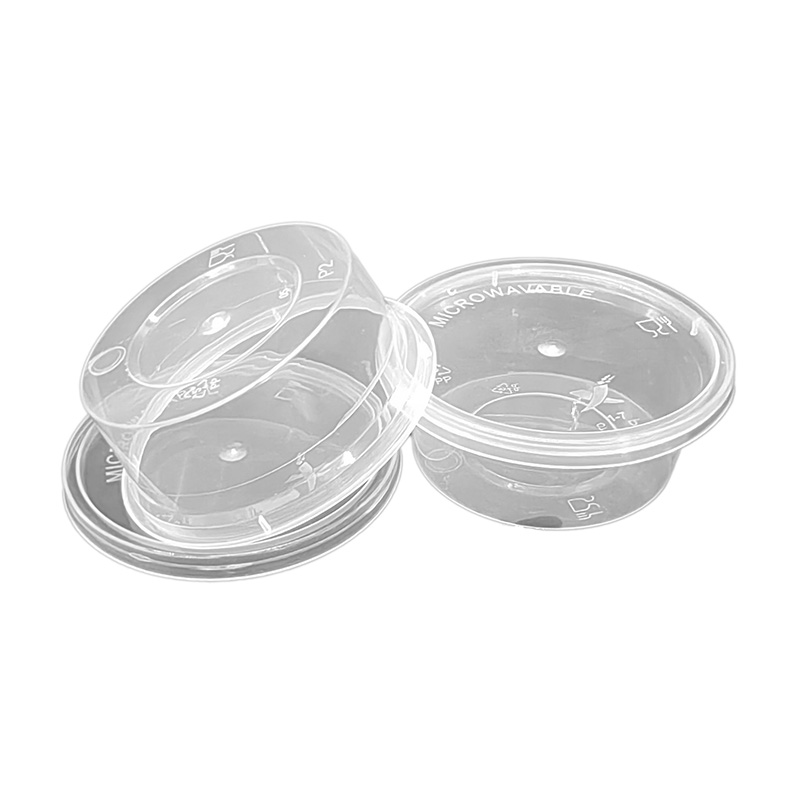
What Is IML Technology?
IML (In-Mold Labeling) is a plastic decoration technology where a pre-printed label is placed directly inside an injection mold before plastic injection begins.
During the molding process, the molten plastic bonds with the label, creating a container with an integrated decorative surface.
Unlike traditional labeling methods, IML does not require a separate labeling process after molding.
The basic concept is:
- Prepare printed labels
- Place the label inside the mold
- Inject molten plastic material
- Combine plastic and label through heat and pressure
- Remove the finished container
The Complete Manufacturing Process of IML Plastic Containers
Step 1: Label Design and Printing
The first stage of IML production begins with label preparation.
Unlike ordinary stickers, IML labels are specially designed to withstand the high temperature and pressure of the injection molding process.
Common label materials include:
- Polypropylene (PP)
- Polyethylene (PE)
- Other compatible plastic films
High-quality printing technology allows manufacturers to create detailed graphics, bright colors, and brand designs directly on the container surface.
Step 2: Robotic Label Placement
One of the key features of IML production is automation.
A robotic system picks up the printed label and places it accurately inside the injection mold.
The positioning process requires high precision because even a small deviation can affect the final appearance of the container.
Modern IML systems usually use:
- High-speed robots
- Vacuum gripping systems
- Automatic positioning controls
Step 3: Injection Molding Process
After the label is positioned, plastic resin is injected into the mold at high temperature and pressure.
The molten plastic fills the mold cavity and surrounds the label.
During this process:
- The plastic takes the shape of the container
- The label bonds with the plastic surface
- The decoration becomes part of the container structure
Step 4: Cooling and Solidification
After injection, the plastic container needs to cool and solidify inside the mold.
The cooling stage affects:
- Container strength
- Surface quality
- Dimensional accuracy
Proper temperature control helps achieve stable production results.
Step 5: Finished Container Removal
Once the container is fully formed, the mold opens and the finished product is removed.
The result is a plastic container with:
- Integrated label decoration
- Smooth surface appearance
- Strong label adhesion
- High-quality printing effects
Why Does the Label Become Part of the Plastic Container?
The secret of IML technology lies in the compatibility between the label material and the plastic resin.
During injection molding, heat and pressure allow the label and plastic surface to combine together.
Because the label is embedded during production, it does not rely on external glue or adhesive layers.
This creates a cleaner and more integrated packaging appearance.
IML Production Process vs Traditional Labeling Process
| Production Stage | IML Technology | Traditional Labeling |
|---|---|---|
| Label Application | Label placed during molding | Label attached after production |
| Manufacturing Steps | Integrated molding and decoration | Separate molding and labeling |
| Appearance | Smooth and seamless surface | May have visible label edges |
| Production Efficiency | Suitable for automated production | Requires additional labeling process |
| Durability | Label is integrated with container | Label may peel or be damaged |
What Materials Are Commonly Used for IML Plastic Containers?
Material selection is an important factor in IML production.
Common materials include:
Polypropylene (PP)
PP is one of the most widely used materials for IML containers because of its lightweight structure, chemical resistance, and compatibility with food packaging applications.
Polyethylene (PE)
PE provides good impact resistance and flexibility, making it suitable for various packaging applications.
Specialty Plastic Materials
Depending on application requirements, manufacturers may use other compatible plastic materials for specific performance needs.
Where Are IML Plastic Containers Used?
IML technology is widely applied in industries where packaging appearance and durability are important.
- Food packaging
- Dairy containers
- Ice cream packaging
- Cosmetic containers
- Paint buckets
- Household product packaging
- Industrial containers
Why Is IML Technology Becoming More Popular?
Several factors are driving the growth of IML packaging:
- Growing demand for attractive packaging designs
- Higher requirements for production efficiency
- Need for durable product decoration
- Increasing automation in manufacturing
As brands continue to focus on packaging appearance and production efficiency, IML technology is becoming an important solution in plastic container manufacturing.
The Future Development of IML Plastic Containers
Future IML technology is expected to continue improving through:
- More advanced automation systems
- Faster production cycles
- More sustainable material solutions
- Higher-quality printing technologies
- More customized packaging designs
Conclusion
IML technology changes the way plastic containers are decorated by integrating labeling directly into the injection molding process. From label preparation and robotic placement to plastic injection and final production, every step requires precise control.
The combination of efficient manufacturing and high-quality appearance makes IML Plastic Containers an important development direction in modern packaging.
Behind every smooth and colorful IML container is a combination of material science, automation technology, and advanced manufacturing processes.
Previous:No News
Send Inquiry



X
We use cookies to offer you a better browsing experience, analyze site traffic and personalize content. By using this site, you agree to our use of cookies.
Privacy Policy